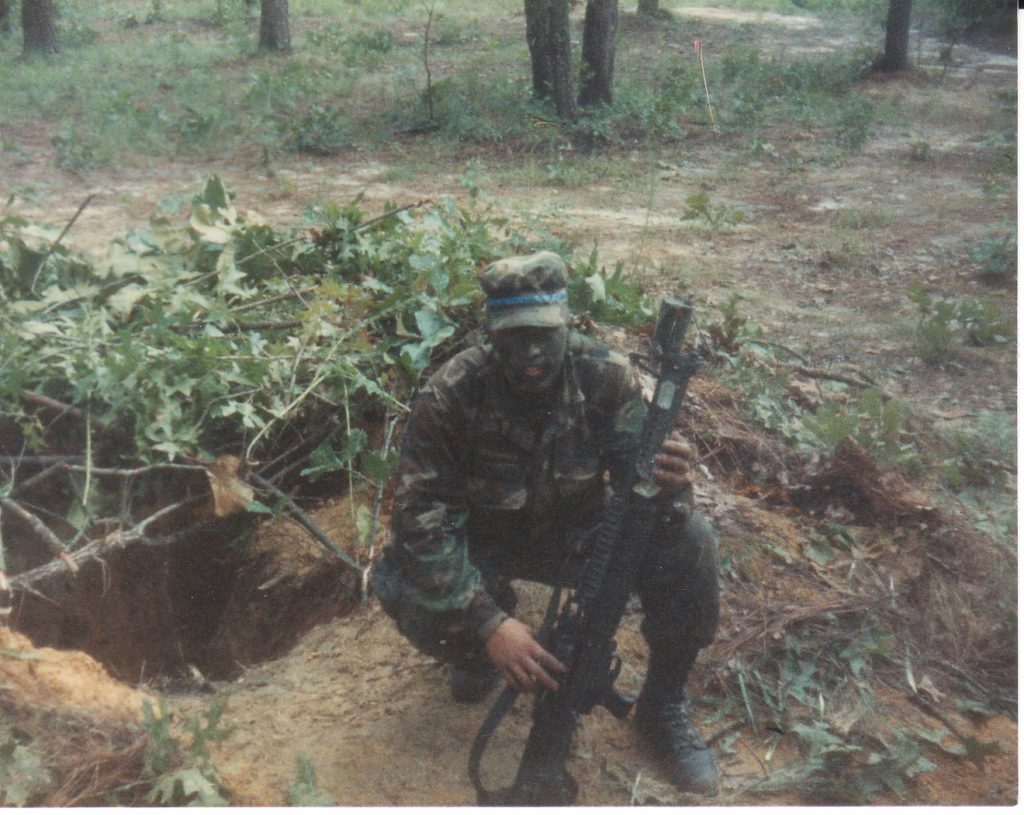
I reorganized my office a few days ago. As I prioritized what to put back in place, I looked at my U.S. Army commission, my awards, and a glass case holding challenge coins and other keepsakes from my military service. I’ve had every opportunity to put them back on the wall in the new house, where they’ve hung in every place I’ve lived since I left the military. There’s a reason that didn’t happen again, and it’s related to how I feel about celebrating July 4th.
I’ve been trying to name the emotion I’ve had for quite a while and again today. “Grief” is the word that fits; grief over a disappearing value system I thought underpinned this country. One could argue it’s being consciously and intentionally destroyed.
My parents, but especially my grandfather, shaped my value system. As a boy, I had always wanted to be like him. The day of my commissioning into the U.S. Army is one of my most cherished memories of him. It was, in a sense, my formal entry into the world I believed he represented and one I was now responsible to uphold as an adult. He hadn’t worn his uniform in years and was quietly relieved it still fit that day in May of 1990. It was one of only two times I ever saw him cry.
He belonged to the “greatest generation,” a generation shaped by the Depression and forged during World War II. His generation was not perfect, but what I observed is this:
His was a generation where the lines between racial and ethnic groups were thicker and brighter and where there were frequent biting comments about this or that group of people, but I also witnessed how my grandfather would stand up for the weaker and would place himself between an aggressor and someone being treated badly. I probably got my guardian nature from his influence. He believed in charity and gave his money generously, while also feeling strongly that people needed to pull themselves up by their bootstraps. He kept his wallet close to his chest and felt the same way about the public’s money. As a selectman and a legislator, he was thrifty with the public’s money because it didn’t belong to those in office. He believed in public service, that we have a responsibility to leave the world around us better than we found it. He believed natural resources are there to be used productively, while also believing we have a duty to be respectful stewards of the environment. His was a generation where there was a stronger sense of shared values and shared social commitments, even where there existed differences in opinion on a range of issues.
More recently, I’ve started to wonder whether the values he exemplified, the ones I thought represented what it means to be American, were ever as broadly American as I thought, or if instead they are the values more isolated to New England. All I know is that those values mattered to me and my perception of what it is to be a citizen and an American. Perhaps I’m just getting old and am increasingly less accepting that culture and values change and that’s just how life goes.
Right at this moment, however, I feel a heavy weight, not unlike how I felt during the Bicentennial in 1976. I was eight years old, watching fireworks at the Washington Monument. While I was too young to truly grasp what was happening in the country, I could feel the weight of Vietnam, Watergate, and 1970s stagflation hovering over what was truly an amazing fireworks display on the mall. I feel a similar weight today. Something heavy is happening in America.
This July 4th, I’ll be thinking about my grandfather’s America, where it exists between friends, where it exists between community members and where it exists between people who are simply going to the grocery store to put food on the table. I might just walk up to a complete stranger and wish them a heartfelt July 4th and see what happens.